When a customer comes to us with a preliminary idea, the product’s development journey is often just beginning. In this example, the plastic part didn’t change much in appearance, but in other respects, the development was all the more significant.
A small part, but big goals
This interesting customer case landed on our desk in early 2024. We started the planning process practically from scratch based on the customer’s problem, since no similar product existed before this. The client had modeled the first version of the part they needed and then asked for our comments on it.
It was a very small part—only 5 cm long and 2 cm wide. The client had already decided on 3D printing as the manufacturing method, since using an injection mold would have been more expensive. However, the plan was to produce thousands of these parts over the coming years, so it made sense to invest in the development process.
So, our team set out to conduct tests and collaborate with the client. We examined factors such as the print orientation, laser paths, XY scaling, and Z-axis compensation to best achieve the following three objectives:
1. An optimal combination of durability and lightness
It was important for the part to be as flexible and elastic as possible. We selected a plastic material for the part that combines toughness and durability and behaves somewhat like memory foam. It always tends to return to its original shape.
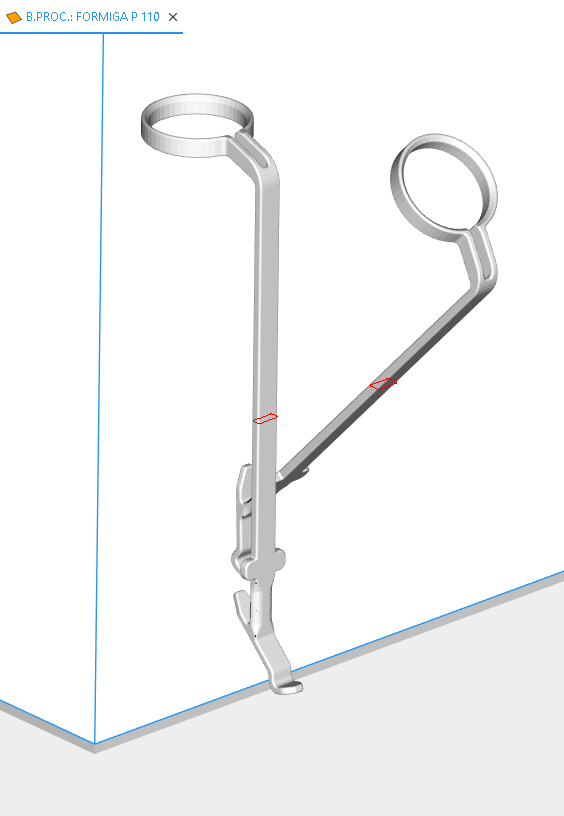
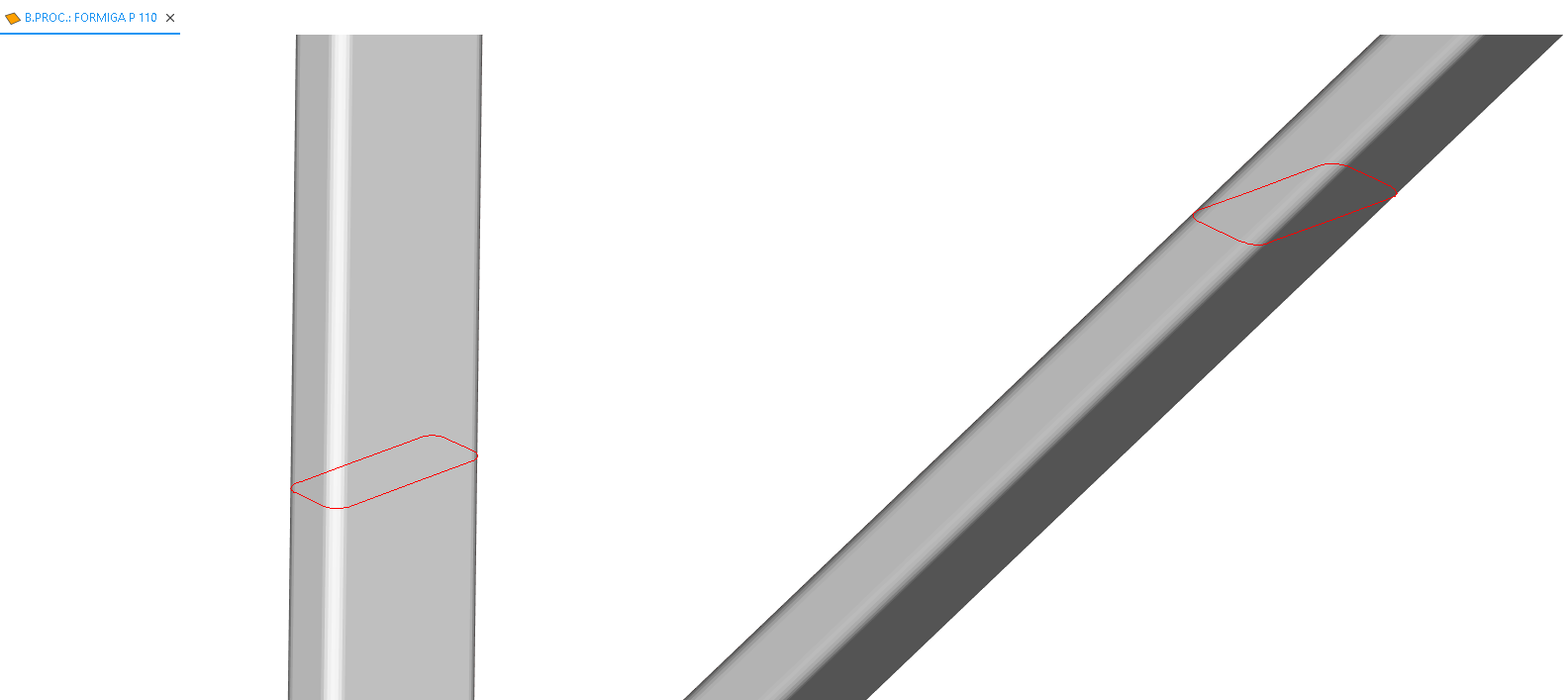
We also needed to make the material as lightweight as possible without compromising reliability. After testing different thicknesses between 0.5 and 1 mm, we settled on 0.7 millimeters. This also ensured that the gap at the top of the part remained large enough for the shot blasting granules used after 3D printing to clean its surfaces.
In addition to evaluating material thickness, we performed laser scanning analysis and tested various printing orientations, ranging from slightly tilted to completely vertical. Tilting—that is, adjusting the print position to an angle—affects the part’s mechanical properties: it allows for a larger surface area to be melted simultaneously, as more laser tracks are applied to that surface.
2. Modern environmental sustainability
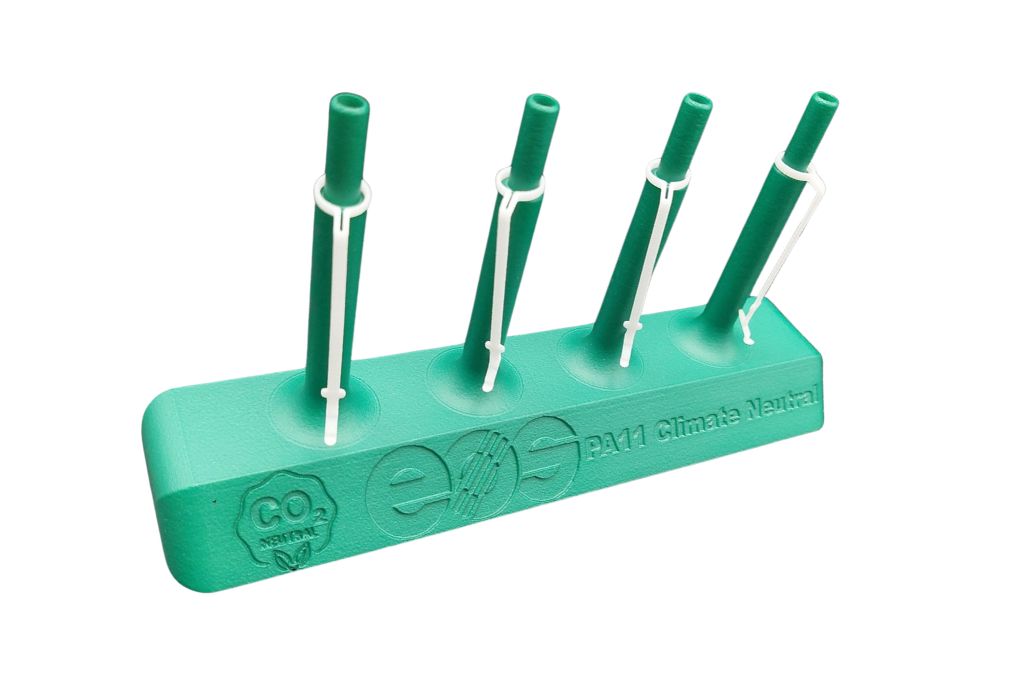
Sustainability and green values play a key role in our client company’s operations, and naturally, these were also taken into account in the manufacturing of this part. The first prototypes of the part were made using traditional PA12, but once the optimal parameters were identified, PA11 ClimateNeutral was selected as the material for the final product; its carbon footprint has been offset to make it climate-neutral.
PA11 is a castor oil-based polyamide material whose properties resemble those of synthetic, oil-based PA12 in many ways. Not only is PA11 the more environmentally friendly of the two, but it also met the requirements of this project even more precisely in terms of elongation at break. As a result, the customer received both a better and a more eco-friendly product.
3. Cost-effective manufacturing
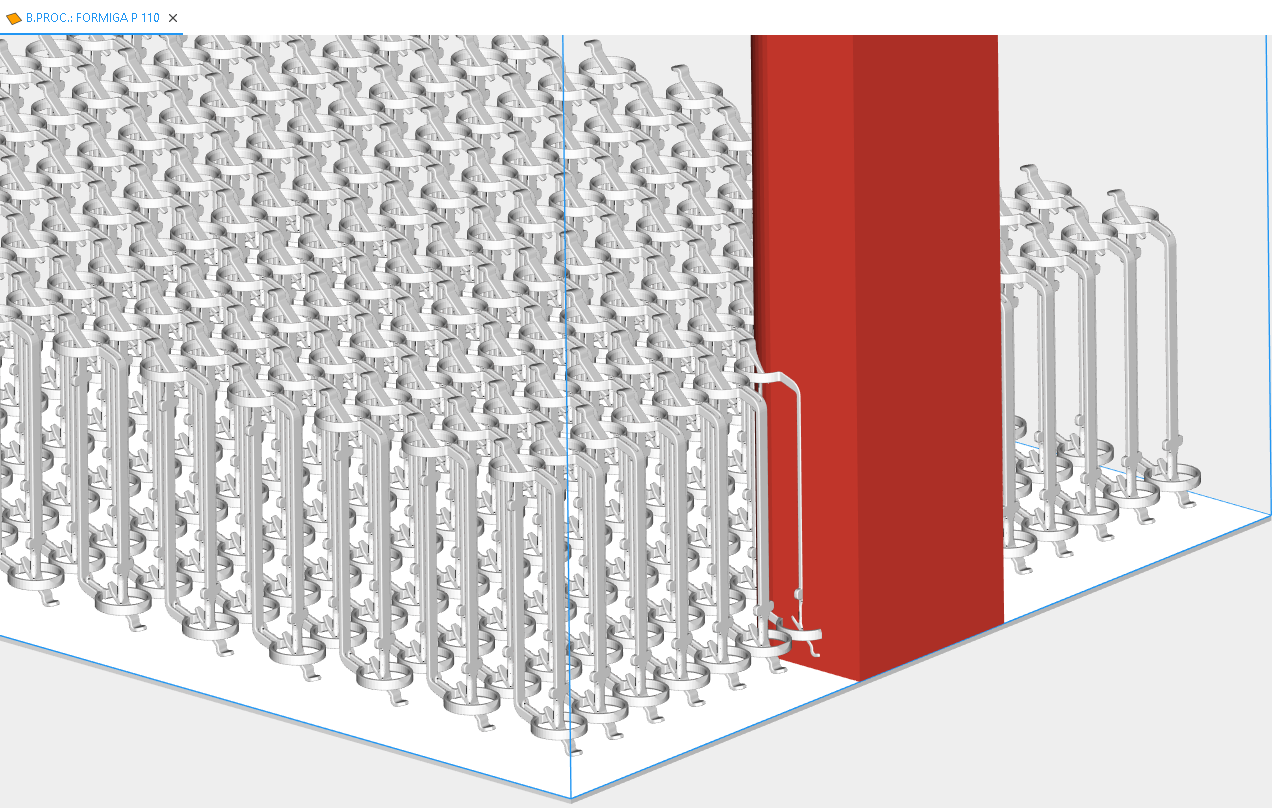
In addition to developing individual parts, we also tested nesting—that is, how to fit as many parts as possible into a single print run.
The geometry of these parts allowed them to be positioned overlapping and nested. The more parts that can be placed in the print chamber at once, the more cost-effective the manufacturing process is. In this case, we were talking about a few thousand parts per year, so carefully planned nesting had a significant impact on the price.
Specifications of the example part:
Size: 5 cm x 2 cm
Material: PA11 ClimateNeutral
Thickness: 0.7 mm
Production volume: several thousand
Are you planning to use 3D printing?
Feel free to contact us early on! We’ll explain how to best produce the part and how you can achieve your desired benefits as efficiently as possible.